

UN Experts Ask for Prosecution of P*rn Platform
WASHINGTON, D.C. May 22 (C-Fam) Two UN human rights experts are raising the alarm about how pornography sites, technology platforms, and payment networks are causing the exploitation of women and girls.
Reem Alsalem, the Special Rapporteur on violence against women and girls, and Ana Brian Nougrères, the Special Rapporteur on the right to privacy, issued a joint press release criticizing businesses that profit from sexual exploitation and the governments that allow them to operate unchecked.
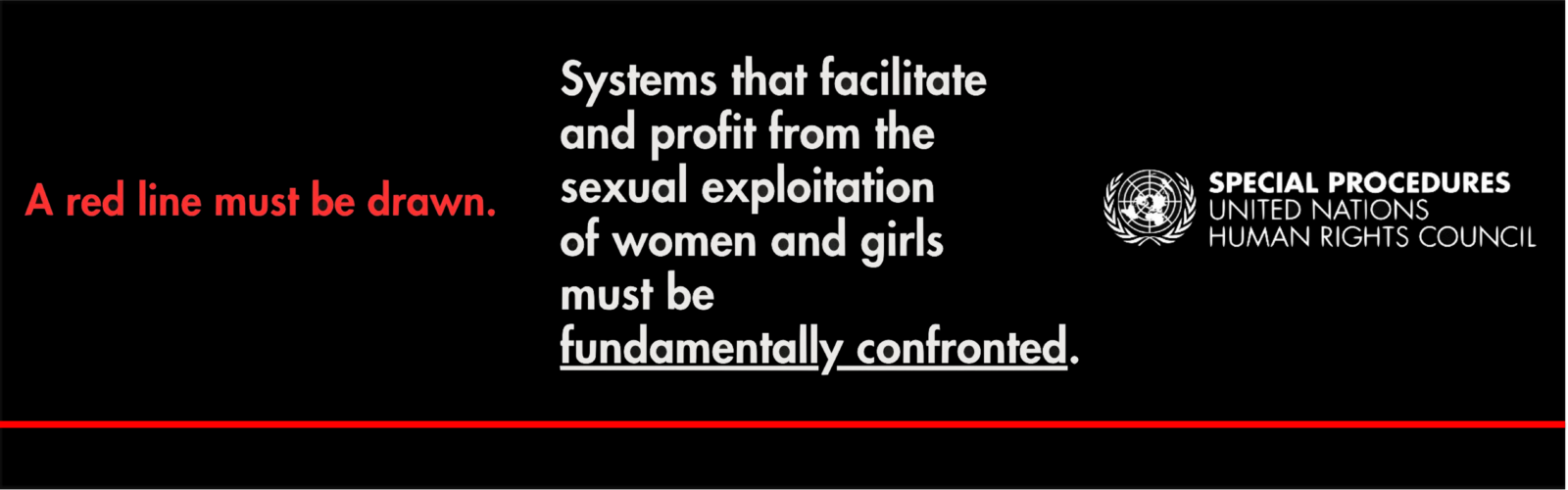
“Systems that facilitate and profit from the sexual exploitation of women and girls cannot merely be regulated at the margins; they must be fundamentally confronted,” they said. “A red line must be drawn.”
Their particular focus was on the Canadian company, Aylo Holdings, previously known as MindGeek, which operates multiple popular pornography sites, including Pornhub. They highlighted two cases of women in the U.S. who had suffered sexual abuse, including grooming and date rape, and whose abusers subsequently uploaded sexual content involving them to Pornhub without their consent.
The rapporteurs urged the governments of the U.S. and Canada to prosecute Aylo and enforce age and consent verification measures on any site featuring user-generated pornography. They also criticized financial networks like Visa and MasterCard for enabling the monetization of abusive content and technology companies like Google, Meta, and Microsoft for facilitating access to the content through their search engines and social media platforms.
They drew attention to the double standard that exists between the physical and online spaces: “The contrast is stark: individuals are imprisoned for trafficking, whilst the corporate entity that enabled and knowingly profited from the criminal enterprise on a large scale avoids conviction.”
Alsalem has previously been outspoken against pornography and prostitution, expressing the view that they are inherently incompatible with the human rights and dignity of those involved, particularly women and girls. She has gone beyond advocating for safeguards like age and consent verification, calling for the abolition of these practices entirely, with an emphasis on criminalizing the buyers of sex acts. This approach, sometimes called the “Nordic model,” focuses on the demand side as well as the middlemen, like pimps, who facilitate the sale of sex acts by others.
Meanwhile, the UN agency for women has officially adopted a “neutral” policy on pornography, while employing the terminology of “sex work” favored by advocates for its decriminalization and normalization. Elsewhere in the UN system, a proposed treaty on “cybercrime” could undermine legal systems to combat child pornography with a new standard that would allow for legal loopholes around virtual child pornography and “sexting.”
Aylo responded to the rapporteurs’ letter asserting that the events outlined in the two cases occurred “under a fundamentally different platform architecture than exists today.” One of the partners at Ethical Capital Partners, Aylo’s owner, said in an interview that “Aylo is legally and ethically run,” and denounced the porn sites that lack age and consent verification and “don’t respect laws.”
While Aylo seeks to draw a division between itself and other pornography platforms that have fewer safeguards, Alsalem argues that there is no ethical way to produce and consume pornography, which she describes as “filmed prostitution.”
Yet while Alsalem remains an outlier in the UN human rights system, there is more widespread support for holding technology and financial platforms accountable for enabling the distribution of content uploaded without consent or involving children, and anyone who profits from its dissemination.
View online at: https://c-fam.org/friday_fax/un-experts-ask-for-prosecution-of-prn-platform/
© 2026 C-Fam (Center for Family & Human Rights).
Permission granted for unlimited use. Credit required.
www.c-fam.org