

Ghana Emerges as Family Values Leader in Africa
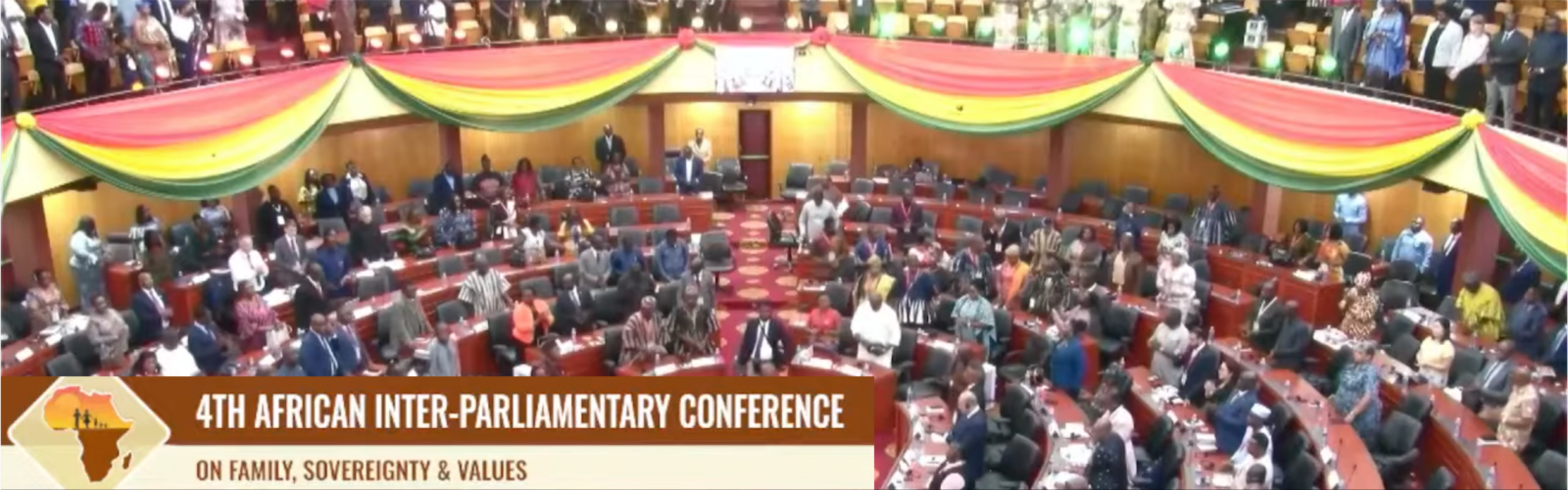
WASHINGTON, D.C., June 12 (C-Fam) Last week, the government of Ghana hosted an African inter-parliamentary conference on family values and sovereignty in its capital, Accra. Conference participants discussed a draft charter on family values for the African region, while Ghana’s parliament passed a national law on family values and sent it to their president for signing into law.
The draft charter pushes back on the UN’s increasingly radical interpretation of “reproductive health” to promote abortion, as well as the controversial curricula promoted under the term “comprehensive sexuality education.” It affirms the family as the “cornerstone of society” and states that, in the African context, “gender” refers only to male and female. It points to efforts to redefine the family and change sexual norms as a form of neocolonialism and cultural imperialism being imposed on Africa from other regions.
Delegates from 20 countries have so far affirmed the draft charter, while South Africa and Mozambique oppose it. Progressive organizations, including LGBTQ organizations, have expressed alarm over the draft and attempted to frame it as a project of conservative funders from the U.S. and Europe. Ipas, an organization focused almost exclusively on promoting abortion, specifically pointed to U.S.-based Family Watch International. Its president, Sharon Slater, told The Guardian that while her organization supports the initiative, it is entirely “Africa-inspired, African-initiated, and African-directed and controlled.”
At the end of May, in its national capacity, Ghana’s parliament passed its “Human Sexual Rights and Family Values Bill,” denounced by critics as an “anti LGBTQ+ bill.” To become law, the bill requires the signature of Ghanaian president John Mahama, who has expressed support for it.
While many African countries criminalize same-sex sexual behavior, especially between men, the Ghanaian bill, if passed, would go even further by criminalizing not only sexual acts but also identifying as LGBTQ or promoting LGBTQ activities. While controversial, the bill enjoys majority support in Ghana, including by Christian, Muslim, and traditional leaders. In contrast, the UN human rights office has condemned an earlier version of the bill, saying it “unduly restricts freedom of association and expression of everyone in Ghana” in addition to criminalizing sexual acts between persons of the same sex.*
In contrast to the Ghanaian bill, the draft regional charter does not call for criminalization, but rather promotes a traditional understanding of the family and expresses opposition to pressure that has been focused on African countries by the UN, donor countries, and other groups to change their laws and social norms around the family and human sexuality. It specifically points to international instruments that have been “redefined or misinterpreted” to pressure African countries on abortion and undermine their national sovereignty.
In contrast, the draft cites among its sources of inspiration the Geneva Consensus Declaration, launched in 2020, which affirms the traditional family, national sovereignty, and the importance of prioritizing women’s health without implying a right to abortion. While several African countries have joined the Geneva Consensus Declaration, Ghana is not yet a signatory.
In 1985, Ghana passed one of the most liberal abortion laws in Africa, and for decades was considered one of the more progressive African nations on social issues. However, in recent years, the country has moved in a more conservative direction. This has been attributed to a rise in evangelical Christianity—the country is over 70 percent Christian—as well as a resistance to increased efforts from outside to increase LGBTQ visibility and change its cultural values.
View online at: https://c-fam.org/friday_fax/ghana-emerges-as-family-values-leader-in-africa/
© 2026 C-Fam (Center for Family & Human Rights).
Permission granted for unlimited use. Credit required.
www.c-fam.org