


Experts Propose Family-Friendly Tech Governance
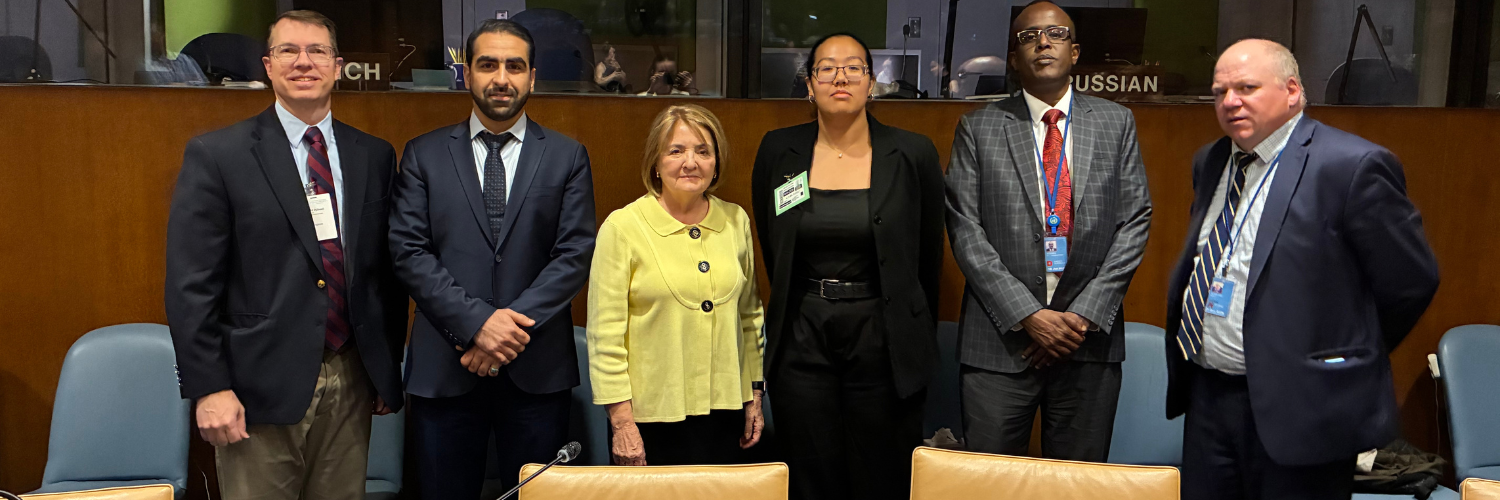
UNITED NATIONS, April 24 (C-Fam) At the just concluded UN Commission on Social Development (CPD), a group of legal, policy, and research experts made the case for a governance model that gives primacy to the well-being of families in technological progress and social development.
At a side event on “Reframing Demographic Policy in the Digital Age,” speakers warned against evaluating societal development and resilience merely based on “demographic outputs.”
Instead, Mr. Hafid Hachimi, Director of UN Policy at Family Watch International, presented a governance framework grounded in the principle of subsidiarity. This model respects the family as the most immediate institution responsible for child formation and balances “authority, responsibility, and participation” among families, public institutions, and other actors.
Based on this framework, “the role of the state is real, but it should be supportive, not substitutive [in relation to families],” Mr. Hachimi continued.
Jeremy Yorgason, a professor in the School of Family Life at Brigham Young University, discussed the family as a key environment for developing secure attachment bonds and presented research showing how those bonds affect child development and adult relationships.
“When secure attachment bonds are not formed and maintained, individuals may develop tendencies to avoid closeness to others, or they may approach close connections with anxiety,” Mr. Yorgason continued.
Professor Yorgason warned against the negative impact of technoference on secure attachment bonds, “which occurs when technology or cell phones interfere with interpersonal relationships.”
Mr. Yorgason referenced studies showing that when “parental technoference occurred, infants showed more negative effects, adolescents reported more negative relationships with parents, and parents responded more harshly to their children.” Mr. Yorgason asked that governments consider how “development and maintenance of secure attachment bonds are impacted or impeded by the interference of technology.”
Autumn Dorsey, Visiting Research Associate at the Center for Technology and the Human Person at Heritage, spoke about technology as a double-edged sword with “potential to do extraordinary good” but also the capacity to exploit and harm children.
Ms. Dorsey warned against the rise of AI chatbots that simulate relationships and distort children’s understanding of human-to-human connections, as well as chatbots that “simulate sexually explicit conversations,” including involving minors. “That’s insane. Why are we doing something like this?” Ms. Dorsey asked.
Ms. Dorsey spoke of a primary responsibility of parents to protect children from harmful technologies, but said parents are “fighting an unfair fight” against “billion-dollar companies”. Ms. Dorsey favored the creation of “child accounts or even devices tailored for children that would have more opt-out standards,” as well as real age verification and “parental consent models.”
Stefano Gennarini, Vice President for the Center of Legal Studies at C-Fam (the publisher of Friday Fax), said “parental rights and the family were always understood to be at the heart of the UN project,” which was “not just as a general aspiration, but really as a foundational legal obligation.”
Mr. Gennarini noted that this framework “is coming more and more under attack in the context of the work of the UN system.” He discussed efforts by the UN bureaucracy and several governments to grant children greater autonomy, including online and in the areas of “sexual rights” and the procurement of “medical abortion” and “powerful contraceptive drugs,” which displaces the proper role and authority of parents and exposes children to harm.
The event was convened by Family Watch International, C-Fam, the Permanent Mission of Djibouti to the UN, and Heritage Foundation.
View online at: https://c-fam.org/friday_fax/experts-propose-family-friendly-tech-governance/
© 2026 C-Fam (Center for Family & Human Rights).
Permission granted for unlimited use. Credit required.
www.c-fam.org