

UN Agencies Call to Censor Pro-Life Speech
WASHINGTON, D.C., February 6 (C-Fam) Digital platforms should be held accountable for allowing misinformation on abortion. These agencies working in tandem say pro-life speech is tantamount to “misinformation” and should be stopped.
The UN’s human reproduction program (HRP), housed in the World Health Organization (WHO), recently published the first of a series of papers examining the impact of abortion “misinformation” as it relates to human rights. Their analysis requires their own idiosyncratic understanding of both misinformation and human rights.
For instance, they accept without caveat that abortion access is a right as part of “sexual and reproductive health and rights”, a term never defined or adopted in any international negotiated outcome.
The paper also cites independent experts and committees as sources of human rights standards. Such experts and committees offer recommendations and opinions on human rights treaties, though they have no authority to create new human rights apart from the plain language of the various human rights treaties.
At the same time, the article makes no mention of the consensus position of the International Conference on Population and Development (Cairo, 1994) that the legal status of abortion is solely for individual governments to determine.
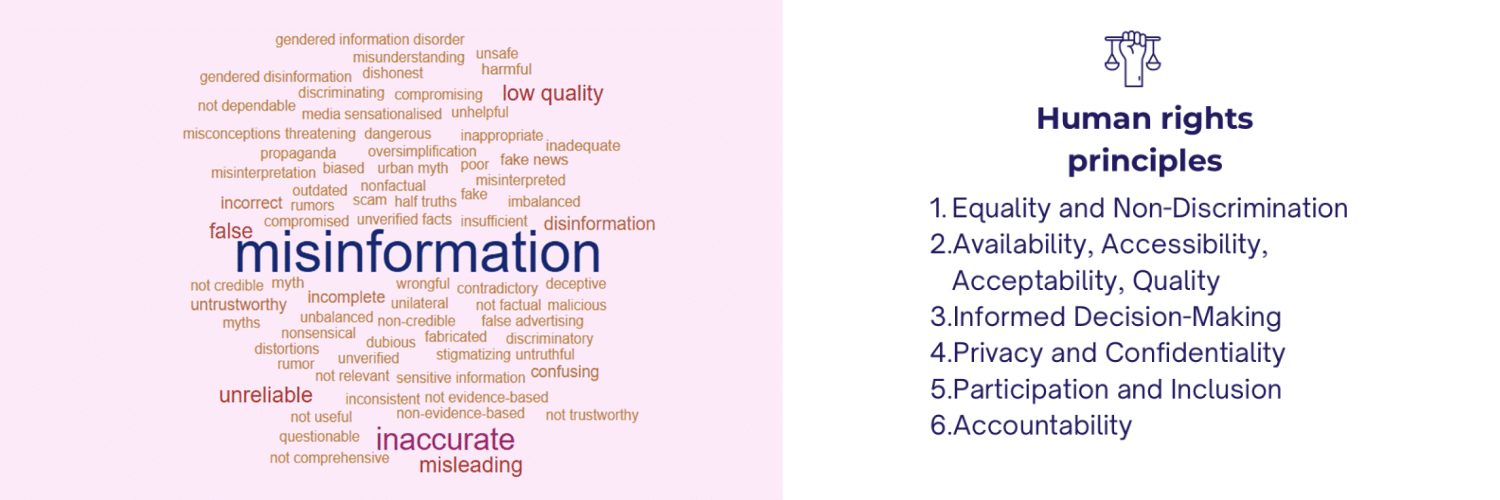
The authors define misinformation as “false, inaccurate, or misleading information shared without intent to deceive,” while disinformation is spread with knowledge and intent to deceive, and “a particularly harmful form of misinformation, with the potential to deliberately erode human rights protections and restrict access to evidence-based care.”
As an example, the authors cite an article claiming that “inaccurate beliefs about fetal pain were linked with antiabortion views, shaping attitudes toward access and policy.” However, the article they cite bases its view of when unborn children can first feel pain on a “current medical consensus” that simply does not exist, while labeling survey participants who support abortion restrictions based on fetal pain as “anti-choice,” a clearly partisan—and derogatory—label.
The article also expressly calls out the U.S.-based Project 2025 project for containing “strategies to embed misinformation into federal governance by altering agency mandates and rewording policies to stigmatize and delegitimize [sexual and reproductive health.]” Here, the citation is to an article in the feminist and pro-abortion Ms. Magazine.
Another example of misinformation offered by the HRP article is the fact that a Canadian Catholic hospital blocked access to the websites of abortion clinics. The article is broadly critical of traditional cultural and religious views; it expresses alarm that a “a rising anti-rights movement in Ethiopia, aligned with the US Christian Right, is working to dismantle the right to safe and legal abortion.” It takes for granted that the nonbinding opinions of UN human rights experts take precedence over religious beliefs. “Human rights standards related to equality and nondiscrimination are routinely impacted” by misinformation, they write, “particularly when gender stereotypes, religious ideologies, or cultural beliefs are used to delegitimize SRHR.” In other words, anything that casts abortion in a negative light is misinformation.
The article does offer some examples of what would commonly be understood as misinformation and disinformation, such as scammers purveying “miracle drugs” and clearly unqualified people offering spurious medical advice on TikTok. However, the HRP authors’ credibility is undermined by their own ideological biases and overreliance on citing others who share them. Ultimately, whatever policy and legal solutions they recommend will have the effect of stifling pro-life voices and censoring conservative viewpoints if they are implemented.
View online at: https://c-fam.org/friday_fax/un-agencies-call-to-censor-pro-life-speech/
© 2026 C-Fam (Center for Family & Human Rights).
Permission granted for unlimited use. Credit required.
www.c-fam.org