


UN Expert Wants Boys to Shower With Girls?

 By Iulia-Elena Cazan
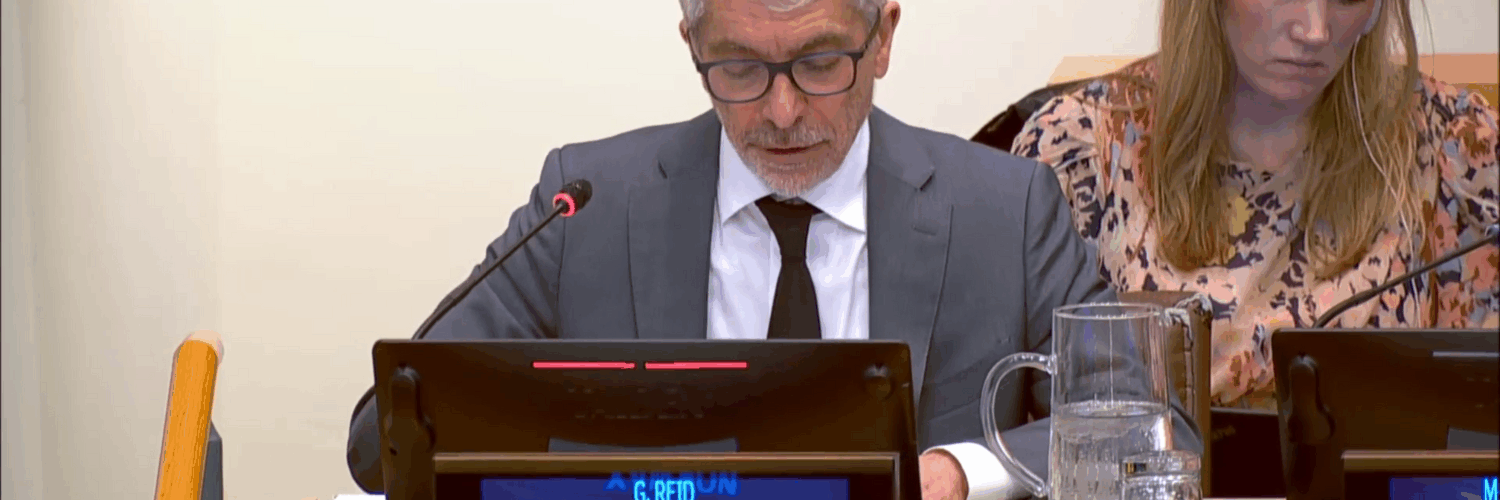
UNITED NATIONS, November 7 (C-Fam) The UN Independent Expert on Sexual Orientation and Gender Identity wants schools to reject binary gender norms, provide gender-affirming services, and normalize diverse sexual orientations in classrooms and libraries. Graeme Reid claims such measures are needed to protect LGBT students from discrimination and bullying.
Speaking at the UN General Assembly this week, Reid said that “strict binary dress codes, gendered appearance rules, and enforcement of ‘masculine’ or ‘feminine’ norms create exclusionary environments that disproportionately harm transgender and gender-nonconforming students.”
Forty-one UN member states, including the UK, Israel, France, Canada, Germany, Denmark, Finland, Norway, Sweden, and Switzerland, voiced “strong support” for the work of the Independent Expert.
Ireland welcomed Reid’s recommendations that governments adopt legislation “enabling transgender and gender-diverse people to change their name and gender marker in the education system through a straightforward administrative process,” saying that such a measure “protects the best interests of the child.”
The report from the Independent Expert states that “laws that deny the possibility of legal recognition, including for children, of self-defined gender identity […] are discriminatory and violate the right to identity” and asks that schools “eliminate gendered requirements in school uniforms” and provide access to bathrooms, locker rooms, and sports teams based on “self-identified gender.”
These recommendations contradict the findings of UN Special Rapporteur Reem Alsalem, who said in her report, “Violence against women and girls in sports,” that “the knowledge of female athletes that they may be competing against males […] causes extreme psychological distress” to women and results in a “violation of their privacy in locker rooms and other intimate spaces.”
Alsalem told the UN Human Rights Council that disconnecting gender from biological sex violates human rights law and puts women at risk. Alsalem recommended that UN member states “uphold the rights of children, including girls, to be free from all forms of physical and mental violence and to the highest attainable standard of physical and mental health, including through the prohibition of legal and social transitioning of children who claim to experience gender dysphoria, as well as their subjugation to experimental, irreversible medical interventions related to gender reassignment.”
Despite the controversy over gender ideology at the General Assembly, Reid encouraged governments to enable gender-affirming practices in schools.
The report criticized sexuality education that “focuses narrowly on reproduction, binary gender roles and the heteronormative nuclear family model” and instead asked for comprehensive sexuality education that is “inclusive of concepts related to sexual orientation, gender identity and expression, and diverse family structures.”
During the exchange with the Independent Expert, Germany said that “caring for the human rights of the LGBTIQ+ community is not an ideology – It is and should remain part of the very idea of the UN’s human rights commitment.”
The terms “sexual orientation and gender identity” are highly ideological at the UN and are not recognized in international law nor referenced in any binding UN treaty.
The Universal Declaration of Human Rights already holds that “all human beings are born free and equal in dignity and rights” without affirming gender ideology through controversial “sexual orientation and gender identity” provisions.
The UN Convention on the Rights of the Child (CRC), along with other legal instruments, promotes the principle of non-discrimination in education, which, when appropriately applied, covers all children against bullying, violence, and maltreatment at school.
View online at: https://c-fam.org/friday_fax/un-expert-wants-boys-to-shower-with-girls/
© 2025 C-Fam (Center for Family & Human Rights).
Permission granted for unlimited use. Credit required.
www.c-fam.org