

“UN Women” Wants to Silence Everyday Speech
WASHINGTON, D.C., July 3 (C-Fam) The UN women’s agency is calling for strong measures to limit gender bias in artificial intelligence technology ahead of a global AI summit in early July, arguing that restrictions on expression are necessary to counter hate speech.
UN Women warned that AI models are “rewriting reality” and “have been found to consistently associate women with ‘home,’ ‘family,’ and ‘children,’ and men with ‘business,’ ‘executive,’ ‘salary,’ and ‘career.’”
However, given that large language models are trained on vast amounts of human-generated material, they are arguably only reflecting reality—it is UN Women that wants to rewrite it.
“[AI models] didn’t pull that bias from nowhere, they actually pulled it from us,” said Jayathma Wickramanayake, a UN Women senior policy advisor. She called for technology platforms to “embed gender equality and the rights and experiences of women and girls at every stage of AI life cycle: development, deployment, governance. Build gender equality from the start.”
In addition to perpetuating bias, UN Women also raised concerns that AI was being used to spread “online violence” against women and girls.
“Some research and some studies around the world show that younger men, they’re getting more conservative than the former generation,” said Kalliopi Mingeirou of UN Women. “They’re opposing more against women’s rights and gender equality. This is a trend.”
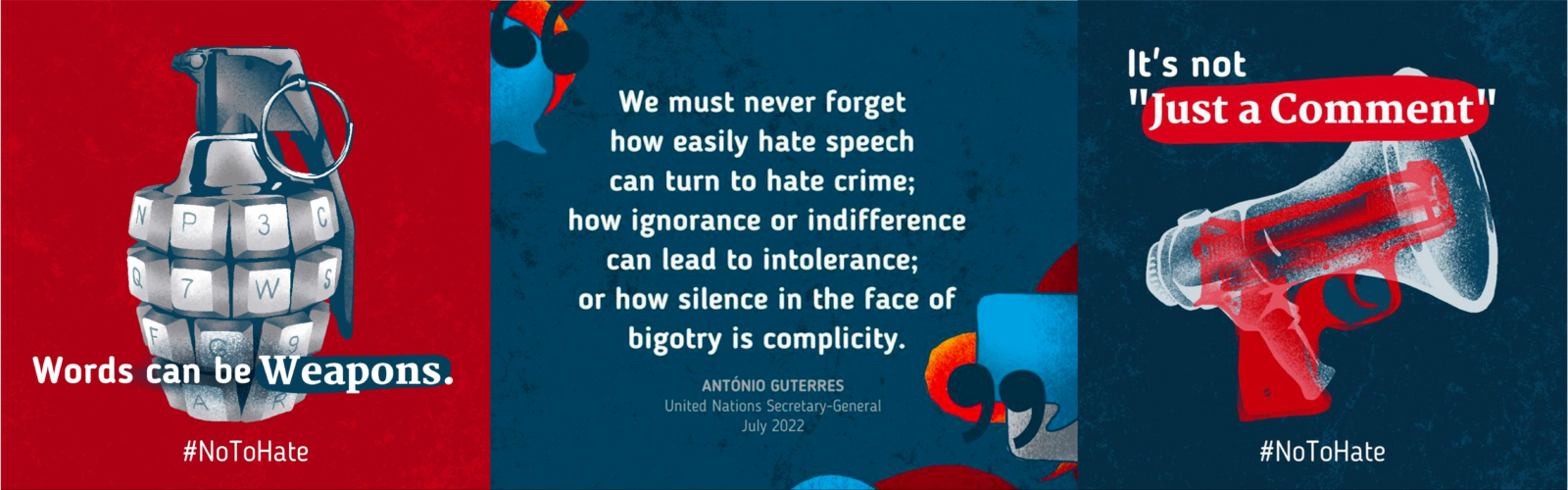
Mingeirou’s remarks were delivered on the International Day for Countering Hate Speech on June 18, an observance created in 2021.
There is no internationally agreed definition of “hate speech.” International human rights law prohibits “incitement to discrimination, hostility or violence,” but the UN working definition of “hate speech,” which remains controversial, is much broader. This nonbinding definition of “hate speech,” created by UN bureaucrats, is “any kind of communication in speech, writing or behavior that attacks or uses pejorative or discriminatory language with reference to a person or a group on the basis of who they are; in other words, based on their religion, ethnicity, nationality, race, colour, descent, gender or other identity factor.”
Because of its broad Constitutional protection of free speech, the United States is one of the strongest voices against censorship in the UN, particularly under the Trump administration. Support for the concept of “hate speech” comes from European Union-aligned countries and also from Muslim countries, although for very different reasons. The Muslim governments use “hate speech” to ban disrespect toward religious symbols in line with their blasphemy laws. Progressive Western countries use “hate speech” restrictions to prevent radicalization, suppress misinformation, and support protections for racial and other minority groups, including those who identify as LGBTQ+.
The UN’s working definition of “hate speech” clearly aligns with the Western countries’ approach.
While AI can clearly be abused to cause harm, such as by the creation of deepfake pornography using images of real people, the UN agencies seeking to create global policy around AI are not focused only on the most extreme cases. To UN Women, any observable differences between men and women in society must be regarded as evidence of bias and discrimination. They therefore argue that AI must be forced to present the world not as it is, but as they want it to be. Should they succeed, pointing out that there are differences between the sexes—and that there are only two of them—could result in censorship or even charges of “hate speech.”
View online at: https://c-fam.org/friday_fax/un-promotes-censorship-under-pretext-of-countering-hate-speech/
© 2026 C-Fam (Center for Family & Human Rights).
Permission granted for unlimited use. Credit required.
www.c-fam.org