

Another Radical Feminist for Secretary General
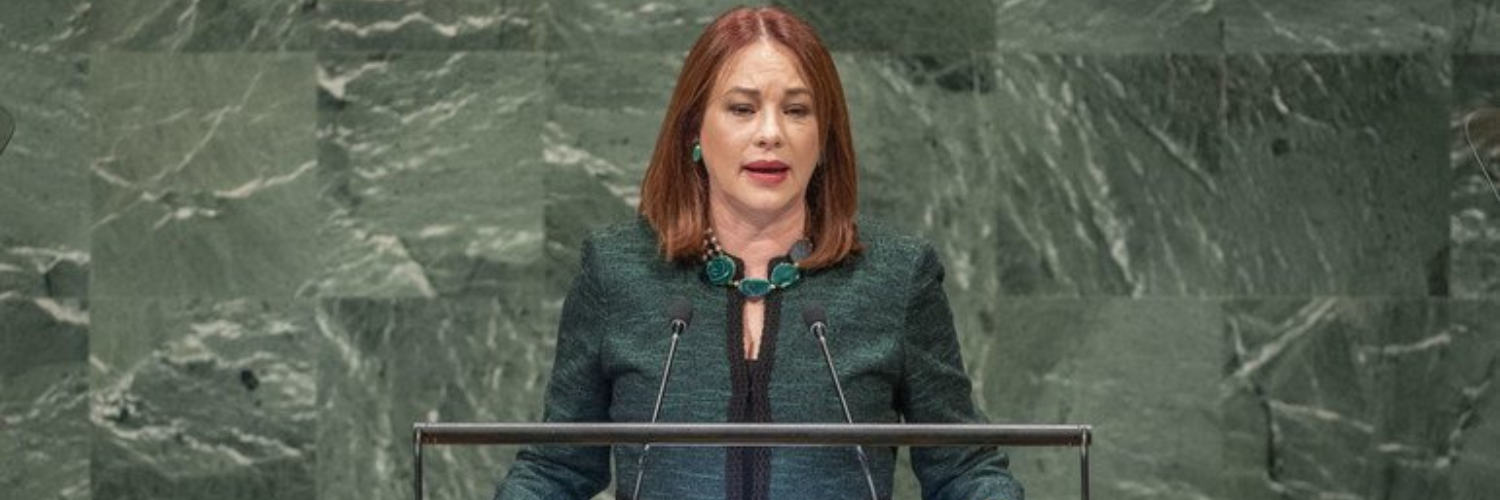
UNITED NATIONS, June 19 (C-Fam) The field is set in the race to select the next UN Secretary General. Maria Fernanda Espinoza of Ecuador, a UN insider and leader of the anti-Trump backlash in his first term, is the latest to enter the fray.
During a three hour interview with UN Ambassadors in the General Assembly on Monday, Espinoza said she was “deeply concerned with recent normative attacks on human rights, including women’s and girls’ full enjoyment of human rights and on gender equality.” The response to a loaded question from the European Union was a not-so-veiled attack on the Trump administration for its opposition to abortion and gender ideology.
Espinoza’s comments were consistent with her criticism of Trump’s pro-life policies in his first term in office and her record of promoting sexual and reproductive health and gender ideology at the United Nations.
Espinoza was previously the defense minister and foreign minister of Ecuador. She was the President of the General Assembly in 2018 and 2019, representing her country as ambassador at UN Headquarters in New York and in Geneva. During that time, she was critical of the “rollback” of women’s rights that was blamed on the Trump administration.
Espinoza has been a leader of the network of pro-abortion and feminist groups that control the UN agenda on women’s issues. After leaving office, she was placed on the steering committee of the Generation Equality Forum, a UN conference that streamlined gender ideology across the entire UN system.
Espinoza published an editorial in the British Medical Journal in 2023 alongside the pro-abortion directors of UN Women and the UN Population Fund, as well as former leader of the UN Development Programme Helen Clark. In it, they called on governments to ensure that “everyone, everywhere can access quality health services, including comprehensive sexual and reproductive health services.”
In 2024, she returned to UN headquarters as an invited speaker for the 30th anniversary of the International Conference on Population and Development. In her speech, she complained about the “concerning trend of regression and pushback against policy and legislative gains on women’s rights.”
Espinoza is the third feminist candidate to enter the race, alongside Michelle Bachelet of Chile and Rebecca Grynspan of Costa Rica. Both Bachelet and Grynspan have records of using their position as UN officials to interfere in domestic political debates about abortion and promote abortion as an international right.
While there has been a strong push by feminist groups and governments for the next UN Secretary General to be a woman, during an event in Geneva last week, all three candidates agreed that the next UN Secretary General should be selected based on merit, and not sex.
Now that the field is set, the Security Council is expected to take a straw poll on the candidates in late July. A straw poll is an informal ballot process designed to avoid a long, politicized debate on the candidates. The fifteen members of the council will indicate on the secret ballot whether they encourage, discourage, or express no opinion on each candidate.
The five permanent members of the council who can exercise veto power have an outsized say in the process. Candidates who are discouraged by a permanent member of the council are expected to quietly withdraw their names from the race. Once a candidate emerges in the straw poll, the Security Council is expected to recommend the candidate to the General Assembly. The General Assembly then selects the Secretary General by a majority vote. The process is expected to be completed by October.
View online at: https://c-fam.org/friday_fax/another-radical-feminist-for-secretary-general/
© 2026 C-Fam (Center for Family & Human Rights).
Permission granted for unlimited use. Credit required.
www.c-fam.org