

Clash Over Censorship at UN
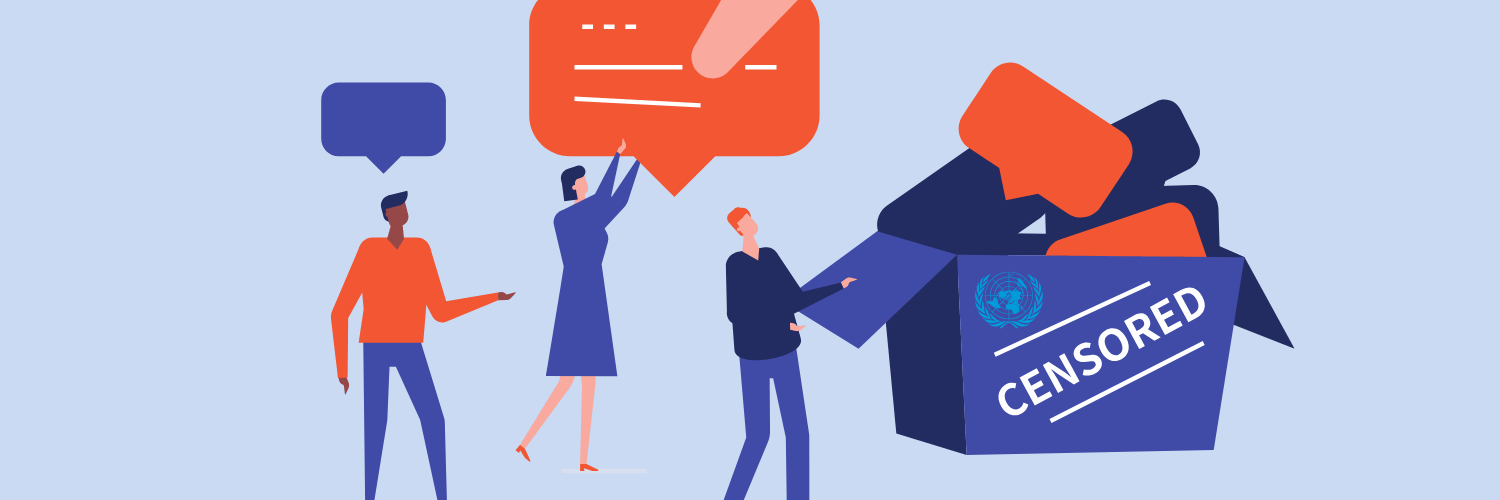
UNITED NATIONS, November 6 (C-Fam) The U.S. and European governments are clashing over censorship in a UN resolution.
A resolution now under debate at the General Assembly includes “countering disinformation and hate speech.” The Trump administration views this as promoting censorship at the global and national level. The language was initially added to UN resolutions with support from the Biden administration.
Europeans and other Western governments support the censorship language. The resolution commits governments and international agencies to impose censorship standards on all technology platforms and to design artificial intelligence so that it only generates politically correct results on issues such as gender, climate, and migration.
Even though the Trump administration has made progress in dismantling the censorship industrial complex at home, much remains to be done to shut down global censorship efforts.
International censorship programs continue to be run under the auspices of UN agreements previously supported by the Biden administration, including the Pact for the Future, the Global Digital Compact, and several UN resolutions, including a UN resolution on Human Rights and Digital Technologies that is being re-negotiated now and is expected to be adopted as soon as next week.
The resolution on Human Rights and Digital Technologies calls on tech companies to design social media and artificial intelligence in a way that avoids “algorithms and ranking systems in amplifying disinformation and hate speech,” and urges tech companies to adopt “content and advertising policies on countering disinformation.” The proposed resolution says that States have a responsibility to adopt censorship laws that “counter the dissemination of disinformation, which can be designed and implemented so as to mislead, to violate and abuse human rights.” It also requires governments to work with the United Nations, tech companies, and academia on building a comprehensive censorship apparatus.
The language in the resolution tracks closely to the elaborate censorship regime of the European Union. The EU Digital Services Act and the EU Artificial Intelligence Law govern censorship in Europe. These EU laws require tech companies to censor any views that challenge the EU Commission’s political priorities on climate, gender, and migration. The censorship tools include content moderation, demonetization, fact-checking, and counter-information.
The Trump administration has criticized this censorship apparatus on multiple occasions due to its potential impact on Americans and American tech companies. Last Summer, Reuters reported that the administration is even weighing sanctions against European officials who enforce the EU’s draconian censorship laws.
The content moderation policies enshrined in the EU Digital Services Act and the UN information integrity policies are similar to policies used by the Biden administration to censor Americans until very recently. According to information uncovered by the House Select Subcommittee on the Weaponization of the Federal Government, tens of millions of Americans were censored for sharing views that were considered politically unfavorable to the Biden administration.
Views that were censored included criticism of Biden in the 2020 U.S. election and concerns about the evidence base for COVID-19 policies, such as vaccine mandates. The web of censorship installed by the Biden administration included direct pressure on social media to censor Americans as well as indirect censorship through ratings agencies, advertising agencies, and partnerships between tech companies and universities. These censorship policies eventually led to the banning of Donald Trump across all major social media platforms in January 2020.
View online at: https://c-fam.org/friday_fax/clash-over-censorship-at-un/
© 2026 C-Fam (Center for Family & Human Rights).
Permission granted for unlimited use. Credit required.
www.c-fam.org