

Diplomats Call UN Back to Founding Principles
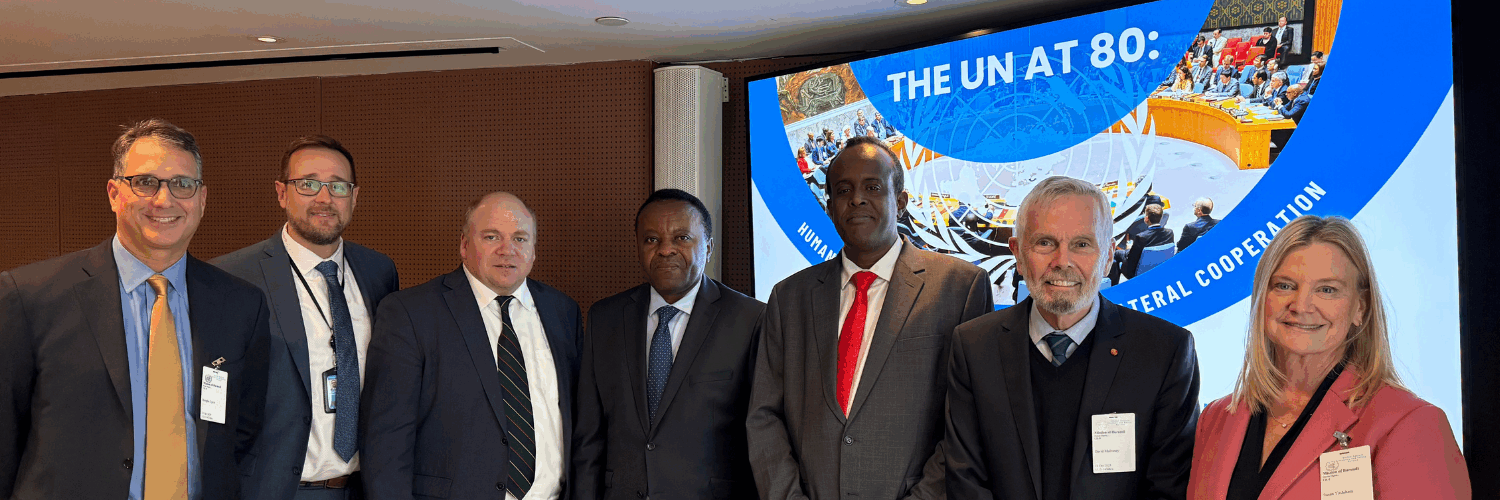
UNITED NATIONS, October 24 (C-Fam) At a UN event celebrating the 80th anniversary of the UN, diplomats and experts called on the UN to get back to basics, including respect for national sovereignty, human dignity, and dialogue based on mutual respect.
At the event organized by the Permanent Missions of Burundi and Djibouti to the UN, Campaign Life Coalition, and C-Fam [publisher of Friday Fax], the Ambassador of Burundi, Zéphyrin Maniratanga, urged member states and the UN system to prioritize human dignity in all agendas and “avoid ideological polarization that undermines trust, cooperation and peace.”
Maniratanga emphasized the need to “return to first principles” and said that “human dignity is not granted by institutions, it is inherent in every human person, it precedes the state, the law, and even the international system” and must “remain the moral compass of all multilateral action.”
Youssouf Aden Moussa, Deputy Permanent Representative of Djibouti, affirmed Djibouti’s “faith in the UN,” but expressed concern about controversial social policies in UN resolutions and an overall “aversion to fundamental principles such as sovereignty, right to development, right to life, and the centrality of the family as the natural and fundamental group unit of society.”
David Mulroney, former Canadian Ambassador to China, said that it was time for progressive states “to drop their megaphones and start listening again.” He lamented the “anti-life impulse” driving Canada’s international assistance programs, which shifted away from maternal, newborn, and child health to sexual and reproductive health (SRH). He called this a “strange and sad decoupling of babies, that most vulnerable of populations, from mothers via the elevation of abortion to the status of ‘healthcare’.”
Stefano Gennarini, Legal Expert at C-Fam, said “the real threat to multilateral cooperation today is not from patriotic political leaders” but from international bureaucracies “who use the UN system as an instrument of global control.”
Susan Yoshihara, Founder and President of the American Council on Women Peace and Security, warned against the growing reliance of the UN system on “global experts” and that the “expertization” of UN policy in the last forty years has led to an agenda that is less concerned with measuring of the real needs of women and more focused on the imposition of “homogenous, expert-generated” policies like gender ideology.
C-Fam board member Douglas Sylva said the UN has “squandered its legitimacy by intervening in domestic affairs in order to impose progressive cultural values as if they were universal,” noting that “member states are routinely told that they must legalize abortion […] to remain in compliance with conventions in which the word never appears.”
Sylva explained that insisting on controversial norms and policies “creates a climate of distrust and distracts the world’s community from pursuing the crucial objectives for which there is no debate.” Mr. Sylva recommended that the UN today relearns the approach of the drafters of the UN Declaration, who knew how to combine “high idealism” with “pragmatism.”
Asociación La Familia Importa (AFI), Family Watch International, Global Center for Human Rights, United Families International, and Universal Peace Federation co-sponsored the meeting.
View online at: https://c-fam.org/friday_fax/diplomats-call-un-back-to-founding-principles/
© 2026 C-Fam (Center for Family & Human Rights).
Permission granted for unlimited use. Credit required.
www.c-fam.org