

European Union Censors Gender Debate at the UN
UNITED NATIONS, March 20 (C-Fam) The European Union blocked a U.S. resolution to define gender at the UN Commission on the Status of Women. They wouldn’t even let it be debated.
Far from a defeat for the Trump administration, the procedural debate showed where nations stand on gender ideology, and just how fragile the European grip on UN social policy is.
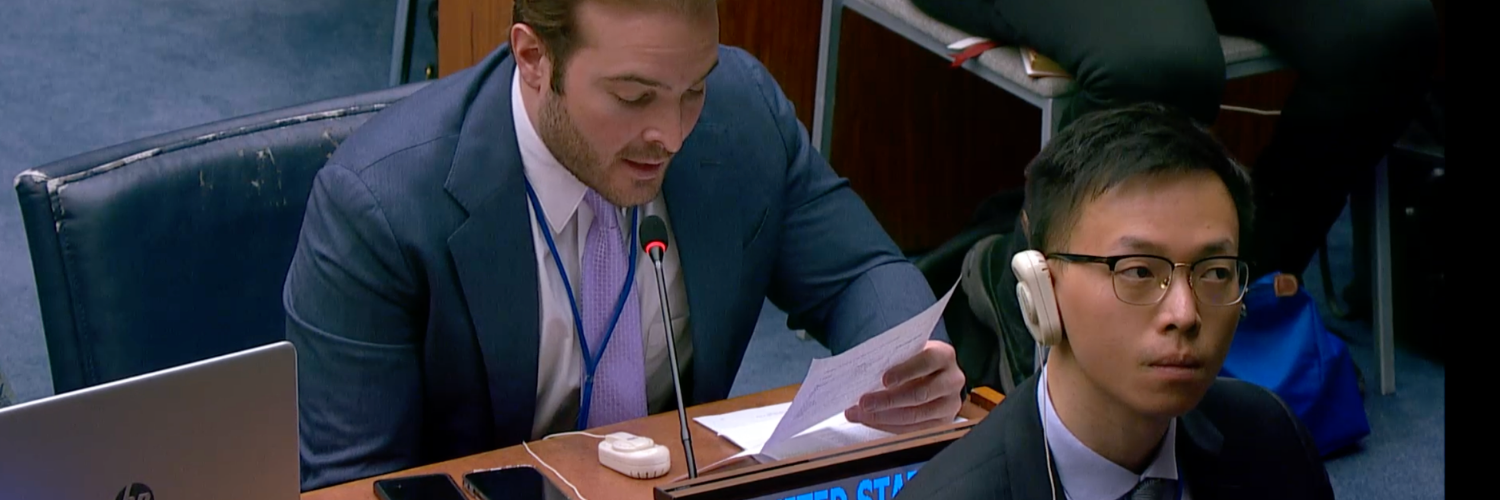
The Trump administration proposed a resolution on Thursday that would have defined gender as only referring to a man and a woman and would have excluded gender ideology. “We will always protect women and girls from dangerous radical gender ideology and reaffirm biological truth,” a U.S. delegate said early in the meeting.
The resolution would have required the entire UN system to use gender according to a binary sex-based definition. A vote on the resolution would have likely resulted in a win for the United States. It was cosponsored by Argentina, Belarus, Burkina Faso, Burundi, the Democratic Republic of the Congo, Hungary, Namibia, Papua New Guinea, Paraguay, the Russian Federation, and Zambia.
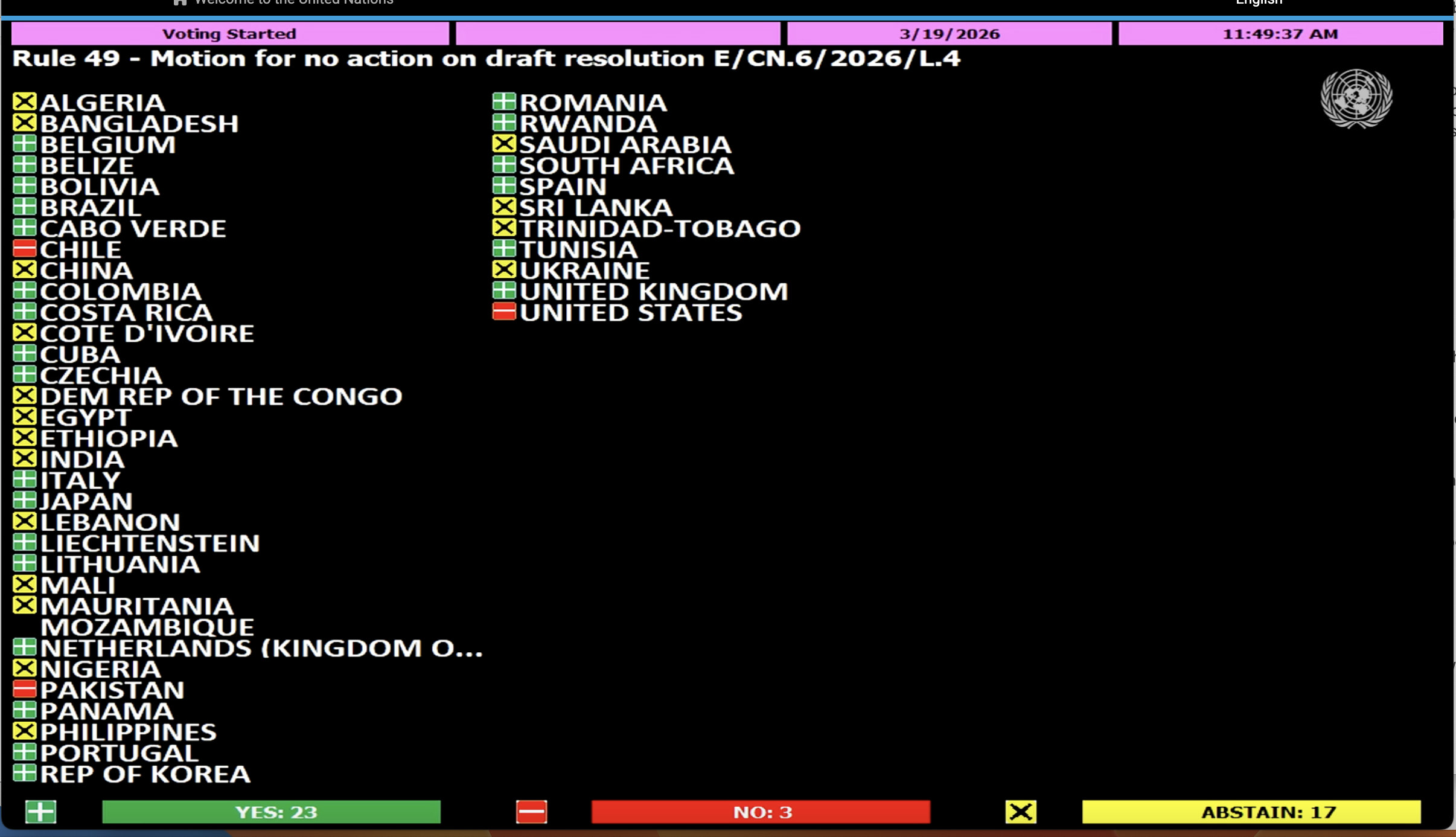
Fearful of a vote on the merits, the European Union used numerous procedural maneuvers to suppress it, including a highly controversial procedural motion called a “no action motion” to block debate on the Trump administration’s proposal. This kind of motion is only rarely used because it prevents all debate and is widely frowned upon.
The “no action motion” was adopted with 23 votes in favor, 3 against, and 17 abstentions. This is a much closer result than it seems. It shows that the days of gender ideology at the UN are counted.
The seventeen governments that abstained are mostly from Africa and Asia. These are countries that, for the most part, have conservative gender laws. Their abstentions reflect the fact that they don’t want to be caught in the middle of a fight between the European Union and the United States. In a vote on the merits of the resolution, they would have had to take sides and would have likely sided with the United States.
The twenty-three votes in favor of the EU motion reflect the governments that will always side with the European Union, no matter what. This includes the countries that are EU members. Several of them are aligned with the United States on gender and may have been deceived by the EU bureaucracy to join the no action motion.
To get all 26 EU member states on board, including largely conservative governments like Hungary, Slovakia, Poland, Italy, and others that have laws that exclude gender ideology, the EU bureaucracy told them that this was nothing more than a procedural motion. In reality, it was an effort to give cover to the UN system to continue to promote gender ideology.
U.S. representative introduces resolution to protect women and children from gender ideology.
The EU bureaucracy also deceived them about the process. The effects of the deceptions spilled over onto the floor of the commission, as both Italy and Czechia complained that they were given bad information about the procedure of the meeting. They were told that they would be able to explain their position on gender, when in fact, the rules of procedure would not have allowed them to.
Both Italy and Czechia emphasized in identical words that “we share the interpretation of the term gender and related expressions as set out in the resolution proposed by the US.” Also, Tunisia, one of the countries under the spell of the EU bureaucracy, made a similar statement. In other words, if a vote had been held on the resolution, the U.S. likely would have had the votes to win.
The EU bureaucracy is in preservation mode. They view the Trump administration as an existential threat and are trying to Trump-proof the UN system in every way they can. They are also closely monitoring the upcoming mid-term elections, hoping that Trump will either be impeached or paralyzed by Congress. Regardless of what happens in the mid-term elections, foreign policy will not be as affected as domestic policy. Given what we just witnessed at the UN Commission on the Status of Women, it may just be the death-knell of gender ideology at the United Nations.
View online at: https://c-fam.org/friday_fax/european-union-censors-gender-debate-at-the-un/
© 2026 C-Fam (Center for Family & Human Rights).
Permission granted for unlimited use. Credit required.
www.c-fam.org