

EU Commission Wants Centralized Censorship
NEW YORK, May 8 (C-Fam) The all-powerful EU Commission has requested a feasibility study on ways to give it direct control over the flow of information and the development of software across all technology platforms in Europe. The study, published last week, found that censoring all content simultaneously across all technology companies in Europe is feasible.
EU laws and regulations already require technology companies to censor their users, mainly through the Digital Services Act and the AI Act. Under these laws, all technology platforms are required to censor their users to combat misinformation, disinformation, and hate speech. This indirect censorship regime is no longer good enough for the EU Commission.
The current EU censorship regime is indirect. It relies on tech companies to do the dirty work of silencing and banning users in the same way that the Obama and Biden administrations weaponized federal agencies to censor U.S. citizens. The EU Commission issues content standards that tech companies must follow. Then, third-party platforms endorsed by the EU Commission and EU bureaucrats flag content for technology companies, who censor it themselves out of fear of being punished with EU fines and other penalties.
Now, the EU Commission wants the power to directly control what people can say online without having to rely on tech companies. The feasibility study was prepared by German tech consultants and concludes that giving the EU commission or its surrogates the power to instantly and simultaneously censor all content across all technology companies in Europe is both possible and desirable.
The censorship software described in the EU report would be built into all technologies used in Europe, but will have repercussions far beyond Europe, including on the speech of Americans.
The publication of the study comes on the heels of an already controversial week for the EU Commission when it comes to censorship.
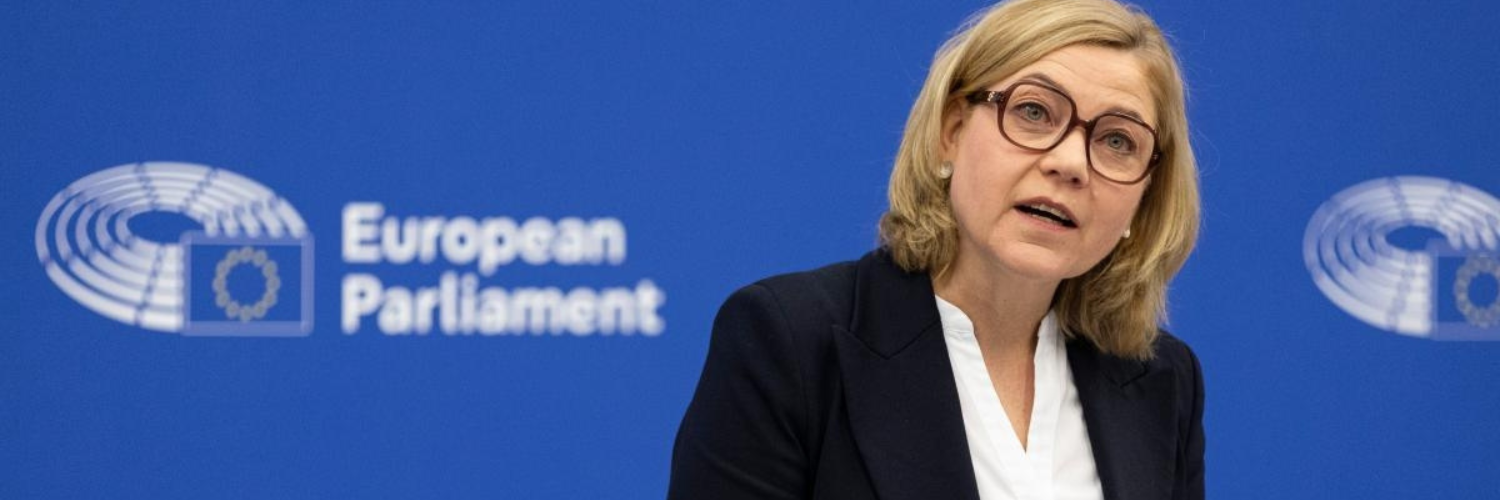
EU Vice-President Henna Virkkunen revealed that the EU Commission’s plans for online child safety may include limiting and perhaps eliminating anonymity for all internet users. Virkkunen suggested that child protection online may require banning secure private browsing tools that prevent websites from detecting the user, like VPNs (virtual private network).
She said the digital passport would be the first step to protecting children, and that “an important part of the next steps” would be to ensure it “wouldn’t be circumvented.”
Eliminating anonymity is something high-level politicians in Europe have repeatedly called for, including German Chancellor Friedrich Merz.
“I want to see real names on the internet. I want to know who is allowed to speak up,” he said in viral remarks earlier this year in which he complained about critics who demand transparency of politicians like him from behind anonymous online accounts. Merz is known to prosecute his critics under a law banning online “insults.” According to reports, he has 300 open cases against such insults.
The information from the EU Commission on online privacy has been contradictory. The EU Commission website says the digital passport app to protect children does indeed protect privacy online and that it would be up to governments to require a digital passport to access the internet and digital services. Virkkunen’s remarks last week suggest that the EU Commission’s ambitions may go beyond merely preserving privacy. They certainly go beyond EU borders.
The EU Commission has openly promoted censorship internationally, including at the United Nations. When the digital passport app was first announced, it was billed as a tool that the EU Commission would make available to all countries as part of EU foreign assistance and would promote internationally.
View online at: https://c-fam.org/friday_fax/eu-commission-wants-centralized-censorship/
© 2026 C-Fam (Center for Family & Human Rights).
Permission granted for unlimited use. Credit required.
www.c-fam.org