

Pro-Life Civil Society Coalition Launches
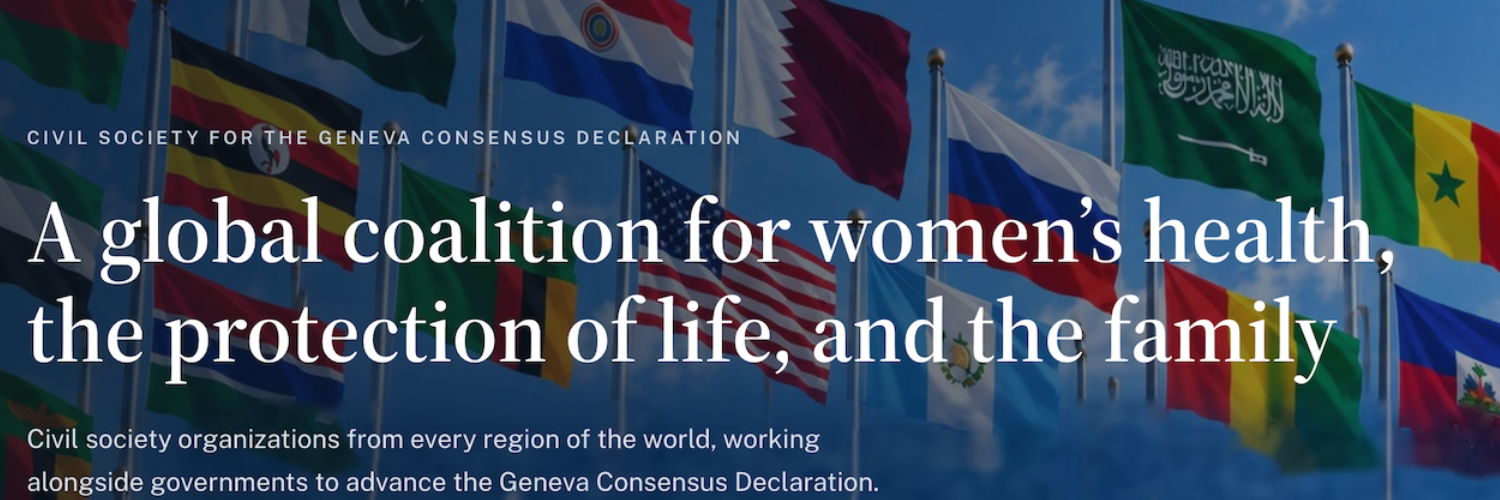
WASHINGTON, D.C., September 25 (C-Fam). A large number of civil society groups from all over the world have joined the 46 governments that have signed the pro-life/pro-family Geneva Consensus Declaration. The governmental and now non-governmental coalition is committed to promoting women’s health, defending human life, respecting national sovereignty, and supporting the family.
More than 100 civil society groups have joined. Civil Society for the Geneva Consensus Declaration has launched and is welcoming new members through its official website, which is available in all six official UN languages. It is led by the Center for Family and Human Rights (the publisher of the Friday Fax), Family Watch International, the Heritage Foundation, the Alliance Defending Freedom, the Global Center for Human Rights, and the Institute for Women’s Health.
One new member is the Eagle Forum, founded by the late conservative leader Phyllis Schlafly. Its president, Kris Ullman, expressed concern about the harms of abortion and gender ideology and her support for the declaration and its signatories. “Every member of the family- mothers, fathers, and children — deserves the opportunity to live a healthy and sustainable life, protected from the harms of abortion and supported by strong families and communities,” she said.
The number of national governments that have signed the Geneva Consensus Declaration has risen to 46, and continues to grow, as was officially announced at its recent six-year anniversary event in Washington, D.C.
While civil society organizations have always supported the declaration, this new coalition will work to bring groups together and ensure the continued success of the partnership and its aims. It will “support UN member states that have signed the Declaration in promoting its principles in their national policies and in the work of the UN system.”
Organizations who join the coalition can play an important role in persuading their national governments to sign the declaration if they have not already, and holding them accountable to enact laws and policies that uphold its priorities.
The launch of the civil society coalition was covered by Devex, which described the declaration as “mix[ing] fairly standard commitments on women’s health with more conservative views around family roles and abortion access,” and noted that more than half of its signatories are African countries.
As the UN General Assembly begins its new term, it is important that signatory countries work together with each other and their civil society partners to promote pro-life and pro-family policies in UN resolutions and push back on efforts to redefine the family or promote a right to abortion in international law.
The United States recently resumed its leadership of the group, appointing Bethany Kozma of the Department of Health and Human Services as the secretariat. President Trump sent a letter saying that under her leadership, “we will build upon the tremendous progress of recent years and strengthen cooperation among participating nations.”
In fact, some of the Geneva Consensus Declaration’s highest praise comes from its opposition. It was described by international abortion group Ipas as “highly impactful.” An article by Spanish scholars referred to the declaration as “highly influential” and the Trump administration’s “most successful discursive tool” against proponents of a “sexual and reproductive health and rights” norm. The president of the pro-abortion Global Justice Center called it “an assault on decades of progress.”
View online at: https://c-fam.org/friday_fax/pro-life-civil-society-coalition-launches/
© 2026 C-Fam (Center for Family & Human Rights).
Permission granted for unlimited use. Credit required.
www.c-fam.org