

Race for UN Sec Gen Stymied
UNITED NATIONS, October 23 (C-Fam) The next UN Secretary-General might not be a woman after all. He or she may not even be in the race yet. Things are stymied.
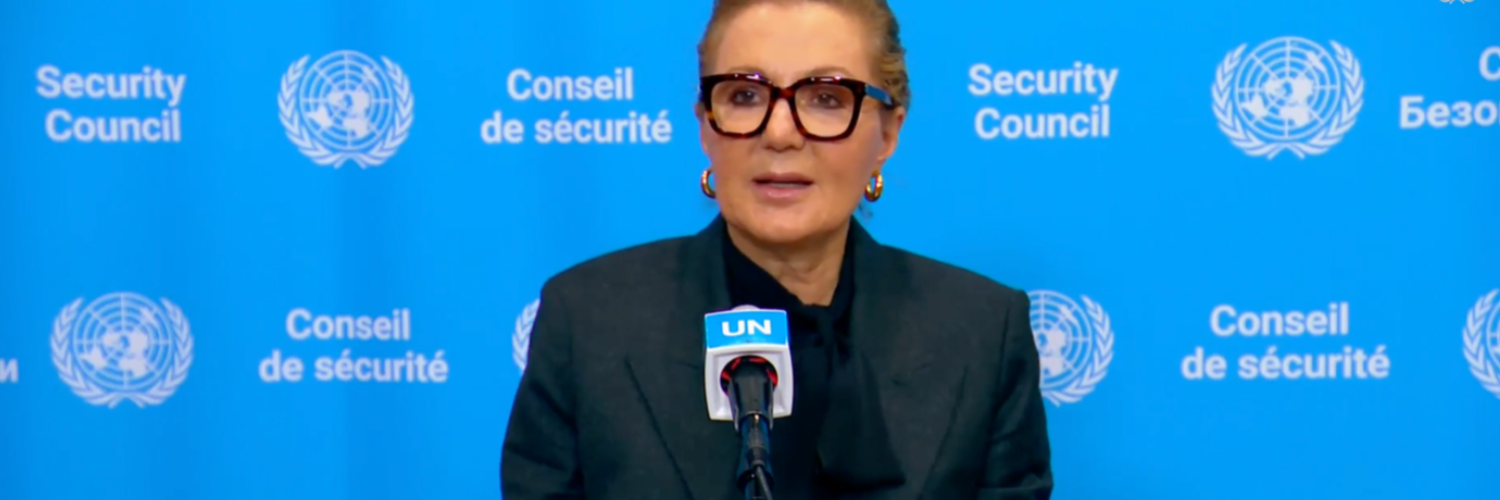
In the latest poll of the UN Security Council, the Permanent Members indicated their displeasure with the leading candidates for UN Secretary General. The three leading candidates, Rebeca Grynspan, Rafael Grossi, and Carolyn Rodrigues-Birkett, each received at least two “discourage” votes.
The implications of this geopolitical standoff are still unclear. For now, three things are known.
First, the Security Council wants the next UN Secretary-General to be from Latin America. Each of the current leading candidates has at least eight “encourage” votes—Grynspan already has nine—which means it would be enough for one permanent member to switch votes to see a candidate through to confirmation in the General Assembly. As noted by PassBlue, the result of the vote shows that there is support across the Security Council for a candidate from Latin America and the Caribbean leading the international organization.
Second, promoting abortion seems to harm chances of getting the top UN job. Former Chilean President and top UN official Michelle Bachelet—who was seen as the frontrunner in the race to be the next UN Secretary—General— was the most outspoken pro-abortion advocate of all the leading candidates. She openly disparaged the Trump administration’s pro-life policies and criticized the U.S. Supreme Court decision to reverse Roe v. Wade as illegitimate. Of the other two leading candidates in the race, only Rebecca Grynspan has a record of using her position as a UN official to interfere in domestic governmental policy on abortion.
Bachelet withdrew from the race last month after her candidacy met opposition from the United States and she lost five favorable votes in the Security Council. This could have a chilling effect on abortion advocacy from United Nations officials who aspire to lead the organization in the future.
Finally, it is clear that cozying up to Trump is not going to get any candidate favors, as Ivonne A-Baki found out the hard way in the last Security Council poll. She campaigned as a pro-Trump candidate, but every Permanent Member of the Council opposed her candidacy, even the United States.
The process to find a new UN Secretary-General has been deadlocked before. It remains to be seen how it will be resolved. The Permanent Members of the Council could change their votes to open the road to one of the existing candidates. The candidates themselves may choose to withdraw to avoid a protracted geopolitical standoff. Some UN observers think we may have an October surprise candidate. Others think the Security Council is unlikely to consider any new ones.
Longtime conservative UN observer Brett Schafer, a fellow at the American Enterprise Institute, thinks the current candidates are likely to withdraw and others will “scramble” to join the race. Veteran UN journalist Mark Leon Goldberg, on the other hand, thinks the race is only just getting “heated up.” He said so in one of the articles that broke the news of the latest secret poll. He does not think any new candidates would be able to gain nine votes in support from the Security Council at this late stage.
In the media frenzy of the UN Security Council stakeout, U.S. Ambassador to the United Nations Mike Waltz said he was confident the UN membership would find a replacement before the end of the year, “certainly before the end of Secretary-General Guterres’s term.”
View online at: https://c-fam.org/friday_fax/race-for-un-sec-gen-stymied/
© 2026 C-Fam (Center for Family & Human Rights).
Permission granted for unlimited use. Credit required.
www.c-fam.org