

Vatican Criticizes UN on Abortion
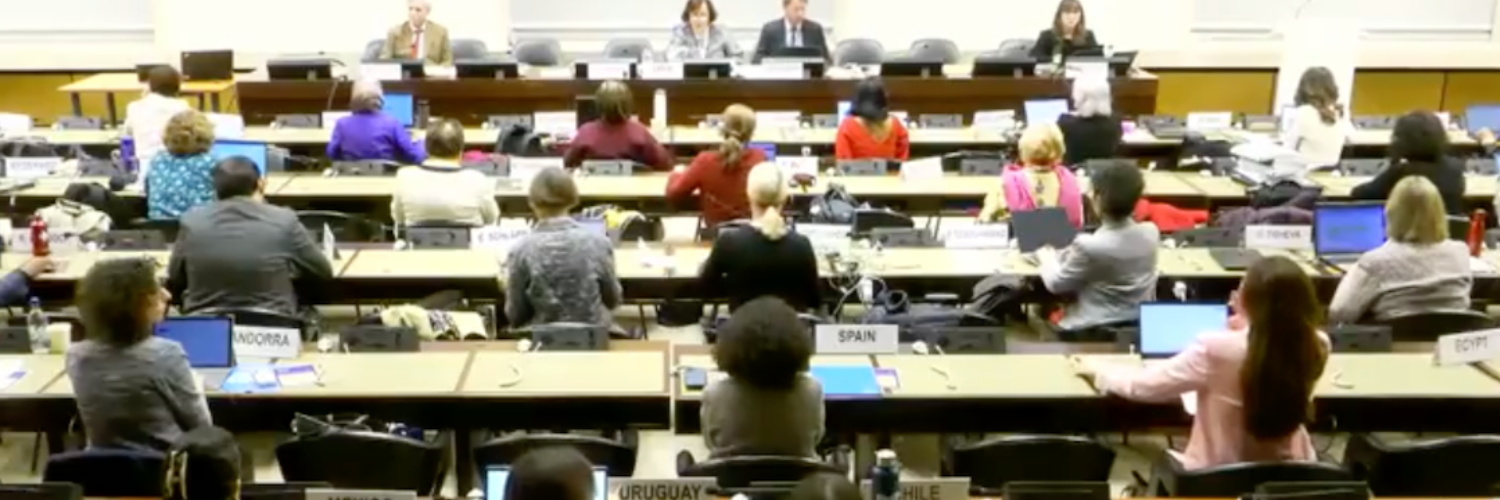
WASHINGTON, D.C. October 30 (C-Fam) In a recent meeting of government officials and civil society groups, the UN committee on women begged for money and at the same time faced sharp criticism for its longtime promotion of abortion. Even the Vatican, not a state party to the women’s rights convention, joined the criticism.
Quite remarkably, while the committee acknowledged that “motherhood is an important contribution” by women to families and societies, it said “many women are compelled into motherhood” by, among other things, the criminalization of abortion.
It goes on to recommend that all states party to its associated treaty, the Convention on the Elimination of All Forms of Discrimination Against Women (CEDAW), “adopt measures to decriminalize abortion and ensure affordable access to comprehensive abortion care.”
The delegate from the Holy See strongly objected to this. Acknowledging that the Holy See has not ratified CEDAW, but seeks to participate in a constructive spirit, “The expression abortion care is profoundly misleading, and it seeks to normalize the deliberate termination of innocent human life by presenting it as health care.”
“Such terminology cannot obscure the fundamental reality that abortion entails the destruction of an unborn human person, nor can it transform abortion into an internationally recognized human right,” the delegate continued.
The Holy See also questioned the committee chair’s assertion that the treaty is a “living instrument,” pointing out that this is inconsistent with the text of the treaty itself as well as the Vienna Convention on the Law of Treaties.
Other objections included the committee’s insistence that religious texts be interpreted in light of CEDAW and the recommendation that governments “implement programs on gender studies, and mandatory sexual and reproductive health and rights education at all levels of the education system.”
The delegate of Egypt also pushed back on the abortion references. “Decriminalizing abortion is not an obligation under the Convention, as the [International Conference on Population and Development] leaves the relevant decision to the national level, each country to set the conditions under which abortion is allowed.”
Importantly, the text of the convention itself does not include any reference to abortion, much less present it as a human right.
While presenting their work at the meeting, members of the CEDAW Committee repeatedly referenced the difficult financial situation faced by the UN. Due to budget cuts, their staff and ability to meet have been restricted. This, according to one committee member, is occurring “in the current context of global backlash and threats against women’s rights.”
While no other national delegate explicitly discussed abortion, the Center for Reproductive Rights was the last to speak. Its representative thanked the committee for the general recommendation “and the explicit reference to sexual and reproductive health and rights, abortion, bodily and reproductive autonomy, and comprehensive sexuality education.”
“Despite clear evidence based on guidance from the World Health Organization calling for the full decriminalization of abortion, many countries continue to include abortion in their criminal law and retain some related abortion offenses,” she continued.
She finished her remarks by calling on the CEDAW Committee to prioritize guaranteeing “access to abortion on request without restrictive grounds and explicitly removing abortion from the criminal courts.”
It is notable that, with regard to abortion and human rights, the World Health Organization also draws guidance from the Center for Reproductive Rights and the CEDAW Committee.
View online at: https://c-fam.org/friday_fax/vatican-criticizes-un-on-abortion/
© 2026 C-Fam (Center for Family & Human Rights).
Permission granted for unlimited use. Credit required.
www.c-fam.org