

UN Vote Shows No Agreement on Abortion and Gender
UNITED NATIONS, November 20 (C-Fam) The Trump administration forced a vote on abortion and gender ideology in the General Assembly. The vote demonstrates once again that such issues do not have support in international law.
In the Third Committee of the General Assembly, the Trump administration proposed five amendments to qualify language about gender and sexual and reproductive health in an EU resolution on violence against women and girls. The biannual resolution —including language promoting abortion and gender ideology — has been voted on for over ten years.
The vote confirmed the tactics of the Trump administration to force a vote in an open and transparent debate on the floor of the General Assembly.
The U.S. amendments qualified otherwise ambiguous terms like “sexual and reproductive health” and “gender” in a way that excludes abortion rights, transgender mutilation of children, and ensures gender refers to men and women according to biological truth.
Even though the amendments were defeated — 72 votes against the amendments, 58 in favor and 63 governments abstaining or absent — the result showed massive support for the U.S. position. The results also demonstrate that there is no international support for claims that abortion and gender ideology are human rights.
Another vote to delete language on “intersectionality” in the same resolution received 58 votes in favor, 72 against, and 63 abstaining or absent.
The results show that Europe and other progressive nations cannot reach a majority to support abortion and gender ideology in the General Assembly. More than 100 countries are either against it politically or not interested enough.
Europe has been staving off a vote on abortion and gender language at the United Nations for the better part of the last year, since the Trump administration first introduced amendments like the ones that were debated this week. Europeans withdrew their own resolution on UN humanitarian operations rather than face a vote on abortion last December. And they manipulated proceedings through controversial procedural motions to avoid an open and transparent vote on gender at the Commission on the Status of Women in March.
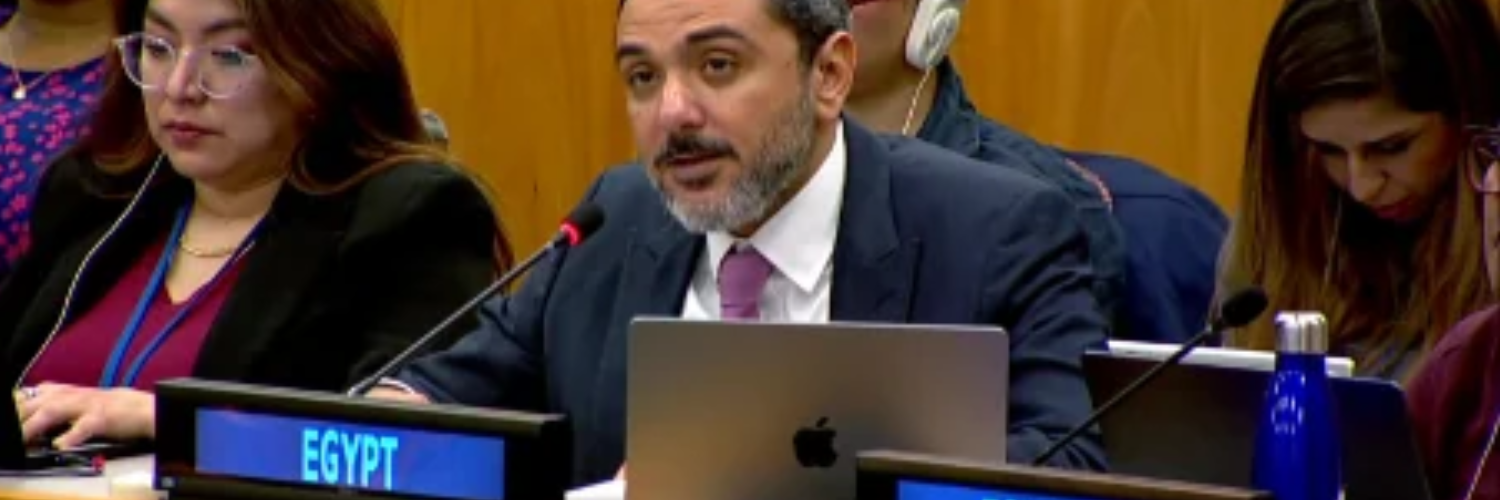
This time, the early tabling of amendments by the United States prevented a procedural motion from Europeans to stop a vote on the U.S. amendments. But they did not stop the EU from blocking a vote on another amendment on the importance of respect for “sovereignty” and the ethical and religious “values” of all people in women’s programs. The amendment was presented by a cross-regional group and supported by the U.S. delegation. A delegate from Egypt derided the EU delegation’s decision to block debate on the amendment. He cited verbatim from a past EU statement that such motions are a “non-democratic practice that censors the debate.” Pro-abortion and progressive human rights groups supported Europe’s decision.
The reason Europe, progressive nations, and activist groups don’t want open votes on such amendments is that they undermine claims that abortion and gender ideology are human rights. Their global strategy to establish abortion and gender ideology as international human rights issues is premised on a stealth approach. They claim human rights evolve through the continuous implementation and interpretation of ambiguous terminology on “sexual and reproductive health” and “gender” in UN resolutions by UN agencies and human rights bodies.
The Trump strategy struck at the heart of this bureaucratic shell game. It showed that there is no global political support for international abortion rights or a redefinition of gender divorced from biological sex. The U.S. statement explained that, according to the U.S. government, “there is no international right to abortion,” that gender refers “only to two sexes, male and female,” and that the vote on the amendments showed that “there is no consensus” on these controversial policies.
The resolution was adopted with the controversial terms, but over two dozen delegations made statements supporting the U.S. positions, even some delegations who voted against the amendments and abstained, including Argentina, Belarus, Cameroon, Chile, Colombia, Djibouti, Egypt, Holy See, Indonesia, Iran, Iraq, Italy, Malaysia, Mali, Namibia, Nicaragua, Niger, Nigeria, Paraguay, Peru, Russian Federation, Senegal, Uganda.
The remarkable support for the U.S. amendments shows that qualifying UN terminology on sexual and reproductive health and gender to stop UN promotion of abortion and gender ideology is possible. The Trump administration might even consider it a way to achieve some easy policy wins during the lame duck.
View online at: https://c-fam.org/friday_fax/un-vote-shows-no-agreement-on-abortion-and-gender/
© 2026 C-Fam (Center for Family & Human Rights).
Permission granted for unlimited use. Credit required.
www.c-fam.org