

Race to Select New UN Secretary General Enters Final Lap
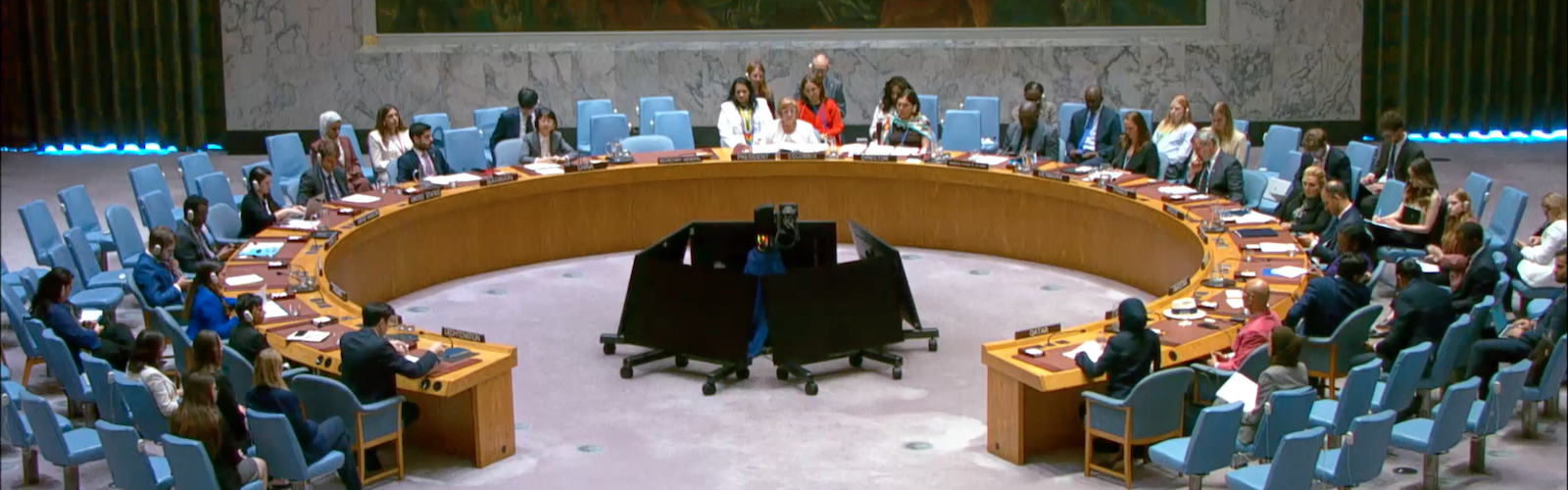
UNITED NATIONS, July 24 (C-Fam) The race to select the next UN Secretary General has entered its final phase. The fifteen members of the Security Council are discussing six candidates, including feminists known to promote abortion, UN insiders, and a self-professed MAGA candidate.
In the coming days, before the end of July, the Security Council will conduct a secret straw poll to determine which of the candidates have enough support to stay in the race. In successive rounds, the members of the council will be asked to indicate for each candidate if they are “encouraged” and “discouraged” or “no opinion expressed.” The straw poll process will be repeated until a candidate emerges.
The candidates must avoid opposition from any one of the five permanent members of the council with veto power—USA, China, Russia, United Kingdom and France—as well as receive a majority of votes. Based on the two most recent elections in 2007 and 2015, the Security Council is expected to make a final recommendation to the General Assembly by October.
The General Assembly hosted a townhall-style debate with the six candidates yesterday. It had the format of a U.S. presidential primary debate. Each candidate had a podium and answered questions in an event moderated by a Bloomberg journalist. The familiar format might have given the impression of an open and politically transparent process, but the selection of a Secretary-General is far from that.
The complex process is shrouded in secrecy, much like a papal conclave. A secret straw poll is followed by a secret recommendation by the Security Council and a secret vote in the General Assembly, if necessary. The reason for secrecy in the process is ostensibly to avoid political scrutiny from all sides and to present whoever is appointed as a consensus candidate. Following such a secret process, all UN Secretary General candidates since 1966 have been appointed by acclamation in the General Assembly.
The UN Secretary General sets the tone of the organization and leads the entire UN bureaucracy. According to the UN Charter, he is the “chief administrative officer” of the organization, responsible for ensuring the organization runs smoothly. In practice, this role has been dramatically expanded. As the UN agenda and budget have grown, successive UN Secretary Generals have accumulated more power and control over ever more resources.
Moreover, since the early 2000s, the UN Secretary General has acted more as a presidential figure with executive policy-making authority than an administrator. This has been especially visible in UN social policy debates about abortion and gender ideology. The current Secretary General, Antonio Guterres, was a staunch ally of U.S. Democrats and the European left throughout his ten-year term. He contributed to incorporating woke leftist policies on abortion, gender, and climate throughout the UN system.
The Trump administration will have a chance to select a candidate to roll back these policies. But it remains unclear whether the administration has sought assurances of this. While the European Union and leftist governments aggressively sought public assurances from candidates that they will continue to support abortion, gender ideology, censorship, and the climate policies, the U.S. government did not participate in any of the public dialogues with the candidates in the General Assembly.
There is a strong push by progressive nations for a female UN Secretary General. Three of the female candidates in the race are known supporters of abortion rights, including Michelle Bachelet of Chile, María Fernanda Espinosa Garcés of Ecuador, and Rebeca Grynspan Mayufis of Costa Rica. The position of Carolyn Rodrigues Birkett of Guyana is unknown, although she is not expected to survive the veto of the U.S. government given her strong criticism of Israel in the UN Security Council. Macky Sall of Senegal is a self-professed MAGA candidate, endorsing the U.S. president’s slogan for the UN system, making him a likely target for a European veto. Rafael Mariano Grossi of Argentina is the current head of the UN atomic energy agency.
View online at: https://c-fam.org/friday_fax/race-to-select-new-secretary-general-enters-final-lap/
© 2026 C-Fam (Center for Family & Human Rights).
Permission granted for unlimited use. Credit required.
www.c-fam.org